UV DTF Gang Sheets: What They Are and When to Use Them
UV DTF is a no-heat, peel-and-stick method for hard surfaces like tumblers, glass, and phone cases. Here is how it works and when to reach for it.

If you have only ever pressed DTF transfers onto shirts, UV DTF is going to open up a whole new side of your business. It is a no-heat, peel-and-stick method built for the hard stuff: tumblers, bottles, glass, phone cases, wood, and metal. No heat press involved. And just like with shirt transfers, you can gang many UV DTF decals onto one sheet to bring your cost per piece down. This guide explains exactly what UV DTF is, how it differs from standard DTF, how a UV DTF gang sheet works, and when to reach for it.
What is UV DTF?
UV DTF stands for ultraviolet direct-to-film. Your design is printed and cured with UV light onto a film, producing a finished adhesive decal that you apply by hand. There is no heat press and no garment involved. In plain terms, it is a premium, full-color sticker you can put on a hard object.
A UV DTF decal usually comes in two layers. The bottom layer carries your printed design and its adhesive. The top layer is an application film, sometimes called transfer tape, that holds the design in place while you position it. You peel the decal off its backing, press it onto the surface, rub it down so it bonds, then peel the top film away. The design stays behind, stuck to the object.
Because the ink is UV cured, the result is a crisp, durable, often textured graphic that wraps around curved surfaces like cups and bottles. It handles water and everyday handling well once applied. For the specifics on what a given decal can take, always defer to the product page.
UV DTF vs standard DTF: the key difference
This is the part people mix up, so let us be clear. These are two different methods for two different jobs.
Standard DTF is a heat transfer. Your design is printed onto film, backed with adhesive powder, and then heat-pressed onto fabric: shirts, hoodies, totes, hats, and other garments. It needs a heat press and heat to bond, and it flexes and stretches with the fabric so it survives washing and wear. If you want to learn the fabric side in depth, start with our DTF transfers collection.
UV DTF is a no-heat adhesive decal. It is built for hard, rigid surfaces, not fabric. There is no heat press, no powder, and no garment. You stick it on by hand.
Here is the simplest way to keep them straight:
- Goes on. Standard DTF: Fabric and garments. UV DTF: Hard, rigid surfaces.
- Applied with. Standard DTF: Heat press. UV DTF: By hand, no heat.
- Common uses. Standard DTF: Shirts, hoodies, totes, hats. UV DTF: Tumblers, glass, phone cases, wood, metal.
- Finish. Standard DTF: Flexes with the fabric. UV DTF: Stays firm on the object.
The one thing to remember: UV DTF is not for shirts, and standard DTF is not for tumblers. Using the wrong one is the most common beginner mistake. If a customer wants a graphic on a drink tumbler and a matching one on a tee, that is a UV DTF decal plus a standard DTF transfer, not one product doing both jobs.
What UV DTF is great for
UV DTF shines anywhere a heat press cannot reach: hard, smooth, and rigid items. The most popular uses include:
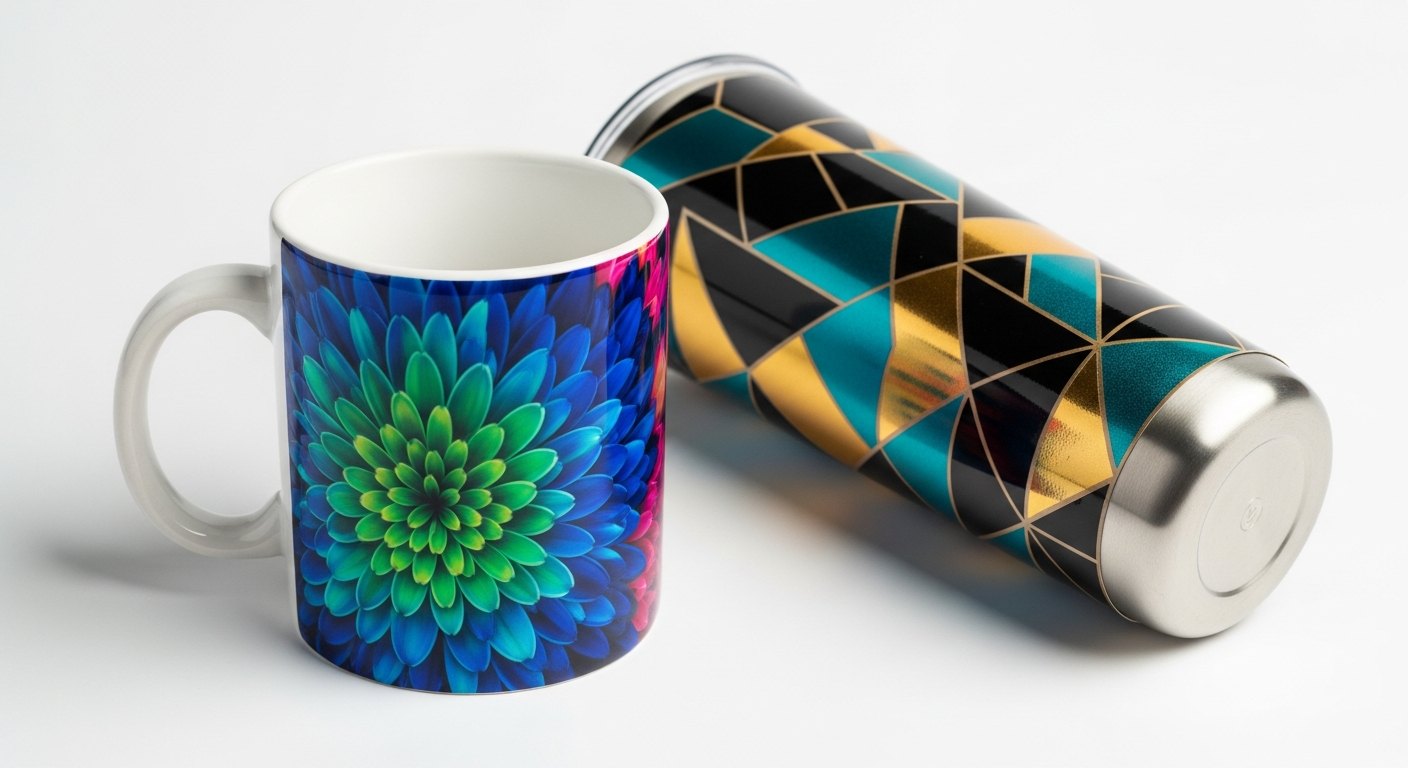
- Drinkware. Tumblers, stainless steel cups, water bottles, glass cups, mugs, and wine glasses. This is the biggest category by far.
- Glass and ceramics. Candle jars, vases, mason jars, plates, and planters.
- Electronics and accessories. Phone cases, laptop lids, tablet backs, and earbud cases.
- Wood and signage. Signs, plaques, coasters, cutting boards, and small decor pieces.
- Metal and acrylic. Tins, flasks, acrylic keychains, blanks, and promotional items.
The appeal is speed and simplicity. There is no press to heat up, no pressure to dial in, and no scorching a delicate blank. For a tumbler business, a craft seller, or a shop adding a drinkware line, UV DTF turns a plain blank into a finished product in under a minute of hands-on work. It also lets a shirt-focused shop expand into gifts, drinkware, and decor without buying new equipment.
How a UV DTF gang sheet works
Here is where the economics get good. Just like fabric DTF, UV DTF is sold by the sheet, and you can gang many decals onto one sheet instead of ordering them one at a time. If you are new to the idea of ganging designs, read what is a gang sheet first.
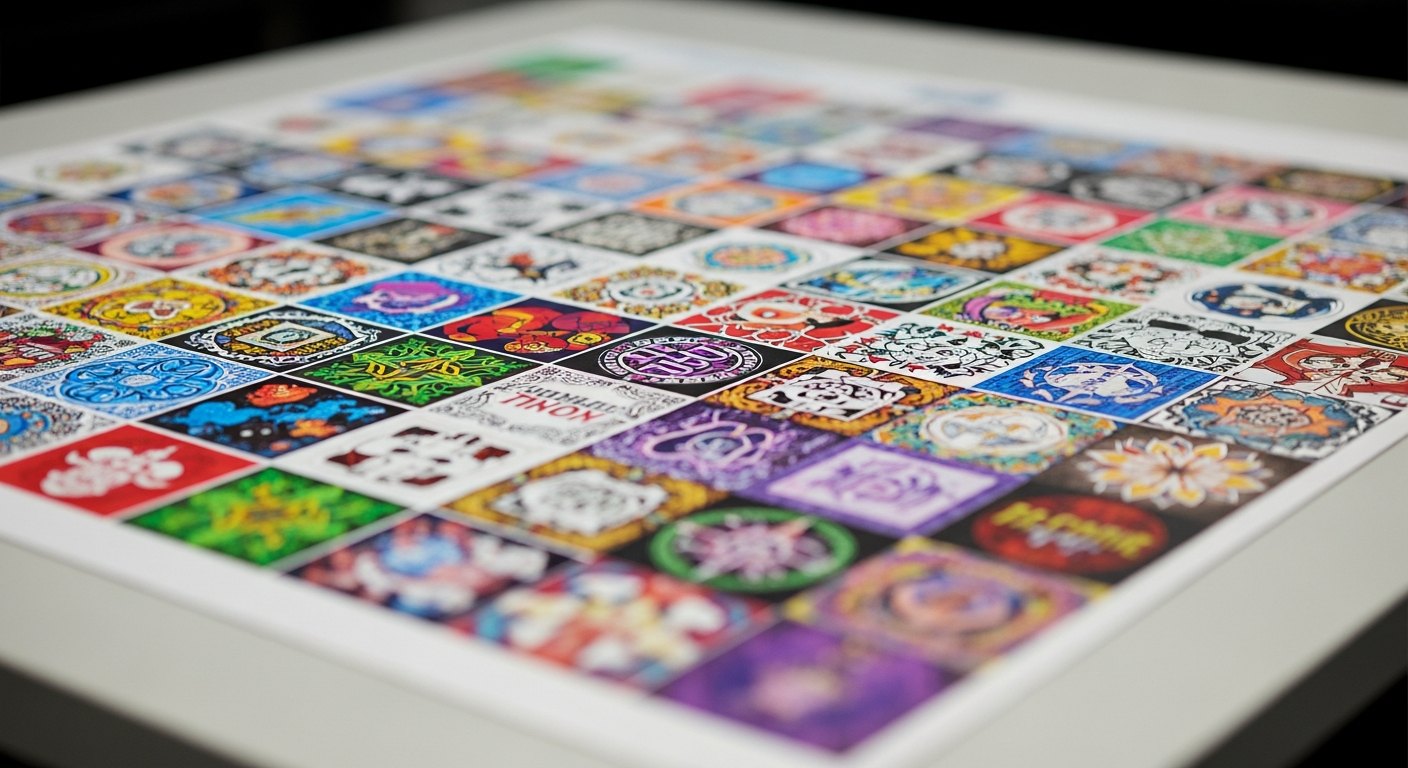
The principle is the same as it is for shirts: you pay for the sheet area, not the number of designs. A sheet with one small decal in the corner costs the same as that sheet packed with twenty. Every empty inch is money spent on blank film. So the move is to fill the sheet.
A UV DTF gang sheet does have a few things to keep in mind that are specific to the method:
- Match each decal to its object. A tumbler wrap, a phone-case graphic, and a small logo for a candle jar are all different sizes. Scale each one to the real item it will go on before you nest them.
- Mix freely. Different designs, different sizes, and different quantities can all ride on one sheet. A batch of the same logo plus a handful of one-off custom names is a perfectly normal single sheet.
- Nest tight, leave room to cut. Push the decals close to fill the space, but keep a small, even gap around each one so you can cut them apart cleanly after the sheet arrives. Each decal keeps its own application film, so you apply them one at a time.
When the sheet arrives, you cut each decal out, peel, stick it to its tumbler or case, rub it down, and remove the top film. One affordable sheet becomes a whole run of finished products.
The fastest way to lay one out is our gang sheet builder. It is a drag-and-drop canvas sized to a real sheet: upload your art, scale each piece to its true size, duplicate what you need in bulk, and nest everything into one print-ready file.
Choosing your UV DTF sheet size
UV DTF sheets come in set sizes, and picking the right one is the same decision you make for fabric gang sheets: get enough area to hold everything you need without leaving large empty gaps. The logic carries straight over, so gang sheet sizes is the place to understand how size drives your cost per piece.
A quick way to think about it: list the items you are decorating, note the size each decal needs to be, and pick a sheet that fits them with a little breathing room for cutting. A single well-filled sheet almost always beats several half-empty small ones on cost per decal.
When to choose UV DTF (and when not to)
Use this as a gut check before you order.
Reach for UV DTF when:
- The item is hard and rigid: a tumbler, bottle, glass, case, sign, or similar.
- You want to apply it fast, by hand, with no heat press.
- You are adding drinkware, gifts, or decor to your lineup.
Reach for standard DTF instead when:
- The item is fabric: a shirt, hoodie, tote, hat, or bag.
- The design needs to stretch, flex, and survive repeated washing on clothing.
If your order is a mix of both, that is normal. Lay out a UV DTF gang sheet for the hard goods and a standard DTF gang sheet for the apparel. Both start in the same place.
Ready to lay out your decals? Build your UV DTF gang sheet in the gang sheet builder.
Frequently asked questions
Auto-nesting, low-res warnings before you pay, shipped same-day from Texas.
Open the builder →