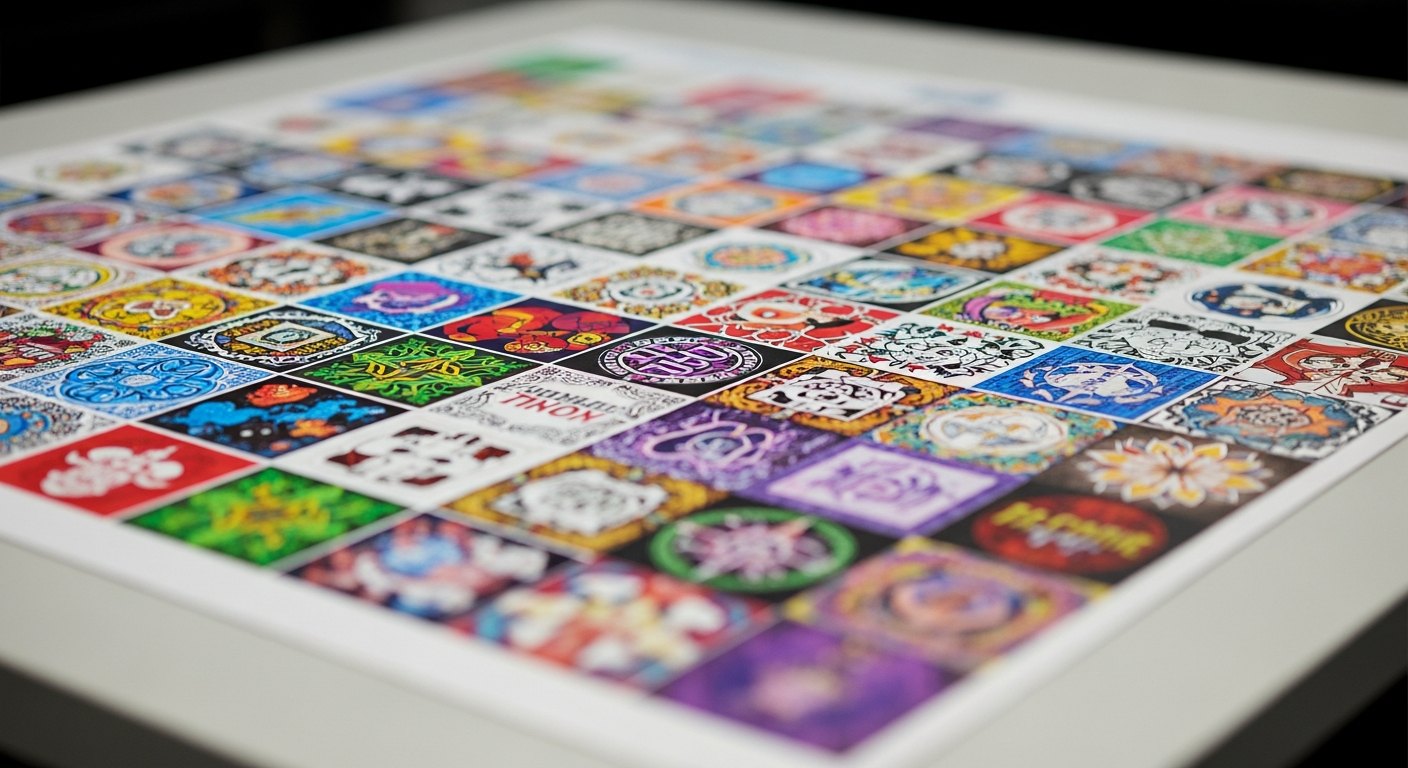
DTF Gang Sheet Pricing Explained: What You Actually Pay For
A gang sheet is not priced per design. You are buying space on a sheet of film, and that one fact changes how you should order to control your price.

Most people think a gang sheet is priced like a menu, one line item per design. It is not. You are buying space on a sheet of film, and that one fact changes how you should order. Understand it and you control your price. This guide breaks down exactly what you pay for, the levers that move your cost, and how to drive your price per transfer down inside the Titan gang sheet builder.
What you are actually paying for
A gang sheet is one large sheet of DTF transfer film with many designs arranged on it. If you are new to the format, start with what is a gang sheet. The important part for pricing is this: the product you buy is the sheet, not the individual designs printed on it.
That means the design count does not set the price. The sheet size does. Two sheets of the same size cost the same whether one carries a single graphic and the other carries forty. The printer runs the same film, the same ink pass, and the same handling either way.
So the real question is never "how much is one design." It is "how much am I paying per square inch of film, and how much of that film am I actually using." Once you think in those terms, pricing stops being a mystery and becomes something you steer.
Area-based pricing, in plain terms
Here is the model in one line: you rent a rectangle of film, and you want to pack it.
The sheet has a fixed printable area. You pay for that whole area the moment you choose the size. Everything you fit inside it rides along at no extra charge beyond the space it takes up. This is why a gang sheet beats ordering transfers one at a time. One-at-a-time pricing forces a minimum amount of film and handling onto every single design. Ganging spreads that cost across everything on the sheet.
Think of it like a food truck buying produce by the crate instead of by the piece. The crate has a set cost. Fill it and each item is cheap. Buy a half-empty crate and you overpaid for every item in it.
The same math runs your gang sheet. Your cost per transfer is simply the sheet price divided by how many usable designs you got out of it. You cannot easily change the sheet price for a given size, but you have full control over the second number. That is where the savings live.
The cost levers you control
Four things move your real cost per print. Three of them are entirely in your hands.
1. The sheet size you choose
Bigger sheets usually carry a lower cost per square inch than small ones, because the fixed handling is spread over more film. A single tall sheet almost always beats several small sheets for the same total artwork. If you are ordering regularly, consolidating into fewer, larger sheets is one of the easiest wins. For how to pick, see gang sheet sizes.
2. How full you pack it (fill rate)
This is the big one. Because you pay for the whole sheet, every empty inch is money spent on nothing. A sheet packed tight can cost meaningfully less per transfer than the same sheet left with large gaps. Fill rate is the single lever that moves your price the most, and it costs you nothing but a few minutes of layout.
3. How tightly you nest
Nesting is the skill of fitting designs together like puzzle pieces so you waste as little film as possible. Rotate odd shapes, interlock them, and tuck small graphics into the gaps around large ones. Better nesting means more designs in the same paid area, which means a lower cost on each one. The full method is in how to fit more designs on one gang sheet.
4. The transfer type (standard vs UV DTF)
Standard DTF and UV DTF are different products and are priced differently. Standard DTF presses onto fabric with heat. UV DTF is a peel-and-stick transfer for hard surfaces like tumblers, bottles, and cases, and it is not heat pressed. They serve different jobs, so pick the one your project actually needs rather than defaulting to one. The builder shows the price for each as you select it.
How the builder prices your sheet live
You do not have to guess at any of this. The gang sheet builder prices your sheet as you work, so you see the effect of every choice in real time.
Here is the flow:
- Pick your sheet size. The price for that size shows immediately. This is your fixed starting cost for the area.
- Upload and place your designs. Drag your artwork onto the canvas and scale each piece to its real pressed size. The sheet price does not jump with each design you add, which is the whole point.
- Watch your cost per design fall. As you add and nest more designs into the same sheet, the price of the sheet holds while the number of transfers climbs. Divide one by the other in your head and your true cost per print keeps dropping.
- Resize the sheet if it helps. If you are running out of room, step up to a larger size and compare. If you have a lot of empty film, step down. The builder reprices instantly so you can find the sweet spot before you ever check out.
Because the number updates live, the builder is also the honest answer to "how much does a gang sheet cost." Prices change by size and transfer type, so the builder, not a blog post, is the source of truth for the figure you will actually pay. We keep pricing numbers off our educational pages on purpose, so you are never quoted a stale price.
A worked way to lower your own cost per print
Put the levers together and you have a simple routine that gets you the lowest realistic price every order.
- Batch your orders. Instead of ordering a few designs now and a few next week, hold them and run them on one fuller sheet. Fewer, fuller sheets beat many thin ones.
- Start big, then trim. Open a generous sheet size, lay everything in, and only size down if you finish with obvious empty film. It is easier to shrink a full sheet than to cram a small one.
- Mix sizes to fill gaps. One large print plus a handful of small logos fills a sheet far better than one size repeated. The small pieces slot into the dead space the big ones leave behind.
- Rotate to interlock. Turning a design even slightly can close a gap. Every closed gap is one more transfer on the same paid sheet.
- Duplicate freely. Need the same logo a dozen times? Copies only cost the space they occupy. Filling a sheet with repeats of one design is a perfectly good way to get your per-print cost down for a bulk run.
Do these five things and you will routinely pull your cost per transfer toward the bottom of what the sheet size allows. That is the entire game.
When your artwork is ready for the garment, the standard transfers themselves live in the DTF transfers collection, and everything you lay out ships as one order.
Ready to see your real price? Build and price your sheet in the gang sheet builder.
Frequently asked questions
Auto-nesting, low-res warnings before you pay, shipped same-day from Texas.
Open the builder →